
Research
Short, sourced answers to the questions manufacturing keeps asking. Every issue states what the evidence supports, how strong that evidence is, and where it stops.

Does OEE really improve production performance?
No. Not on its own.
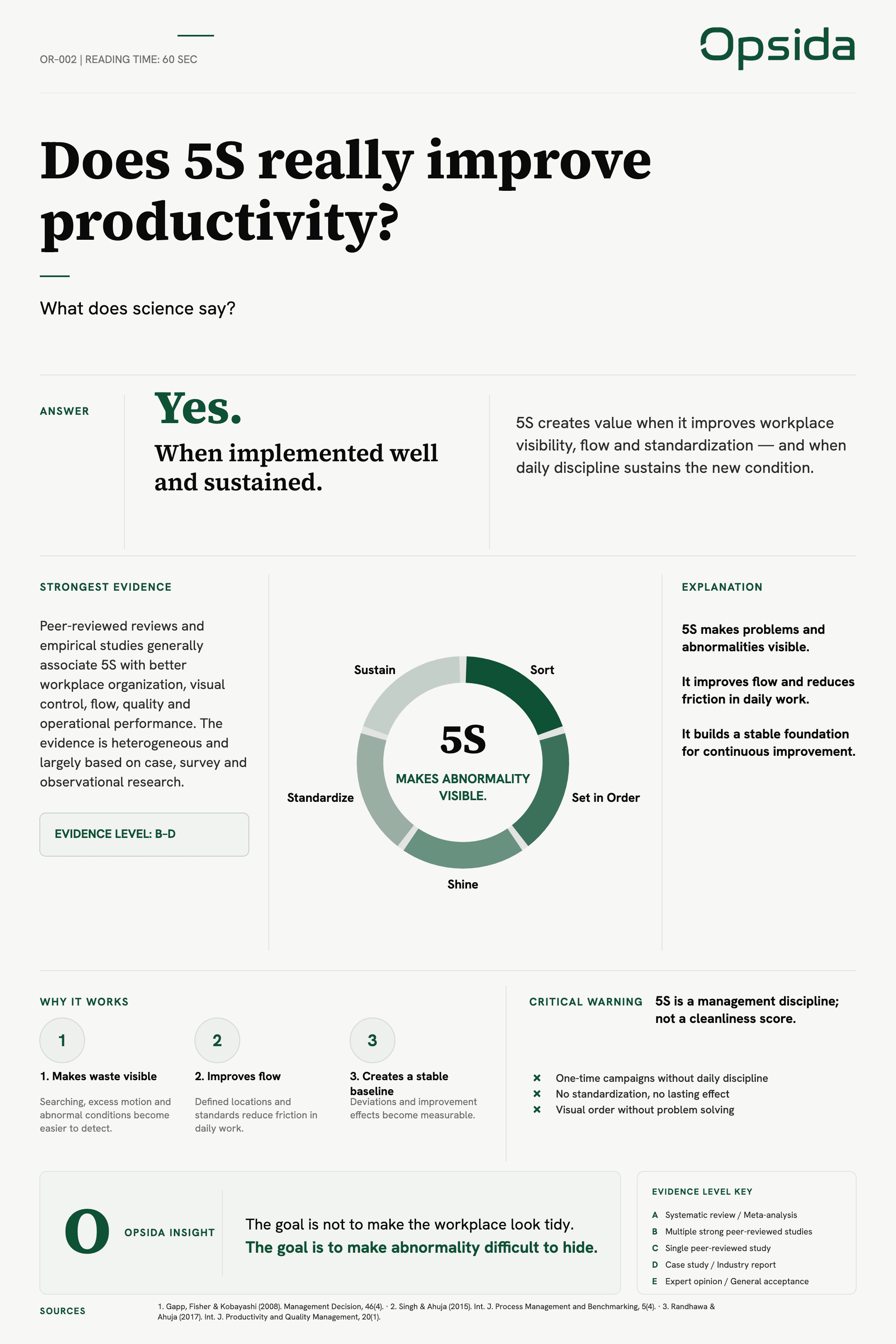
Does 5S really improve productivity?
Yes. When implemented well and sustained.
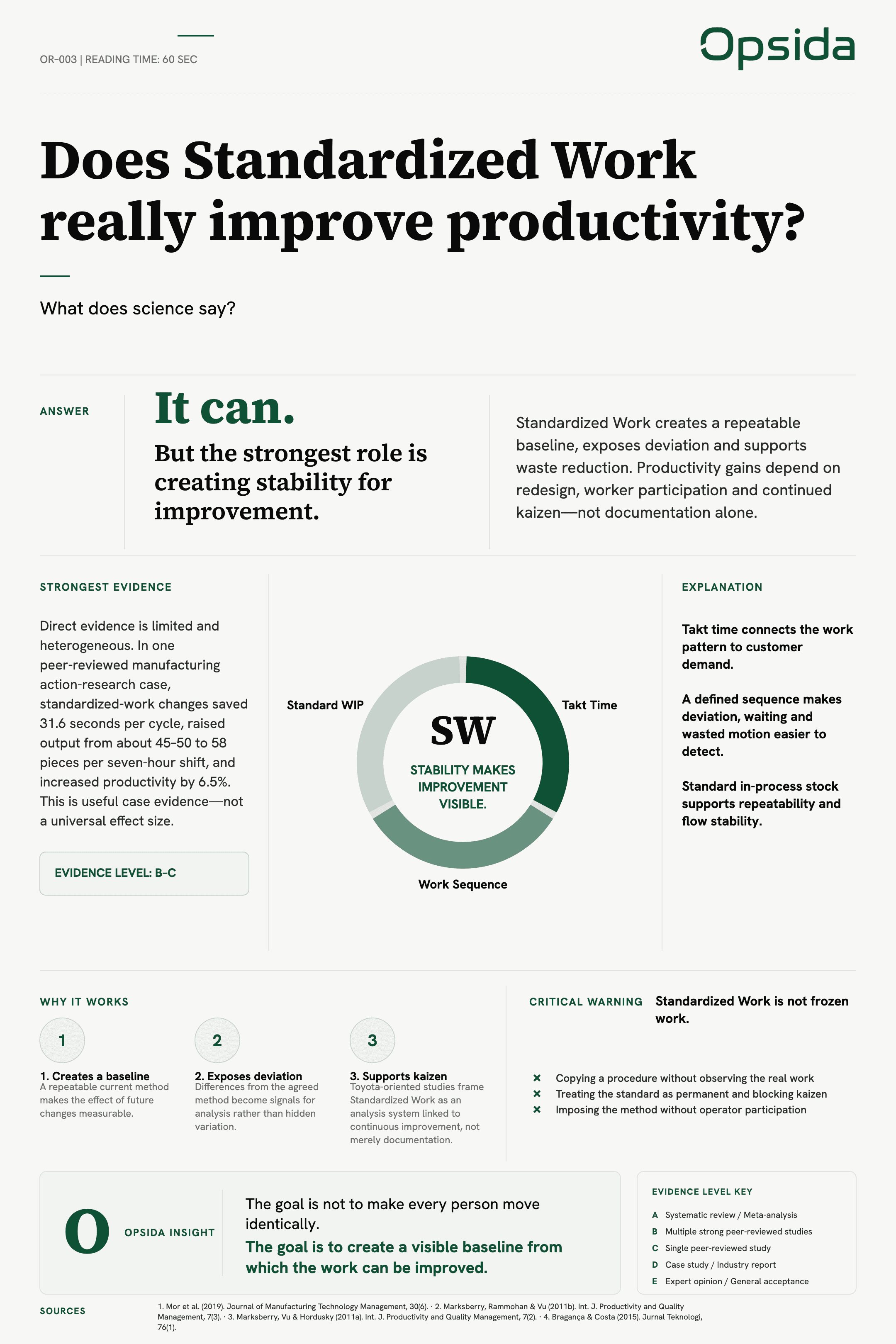
Does Standardized Work really improve productivity?
It can. But the strongest role is creating stability for improvement.
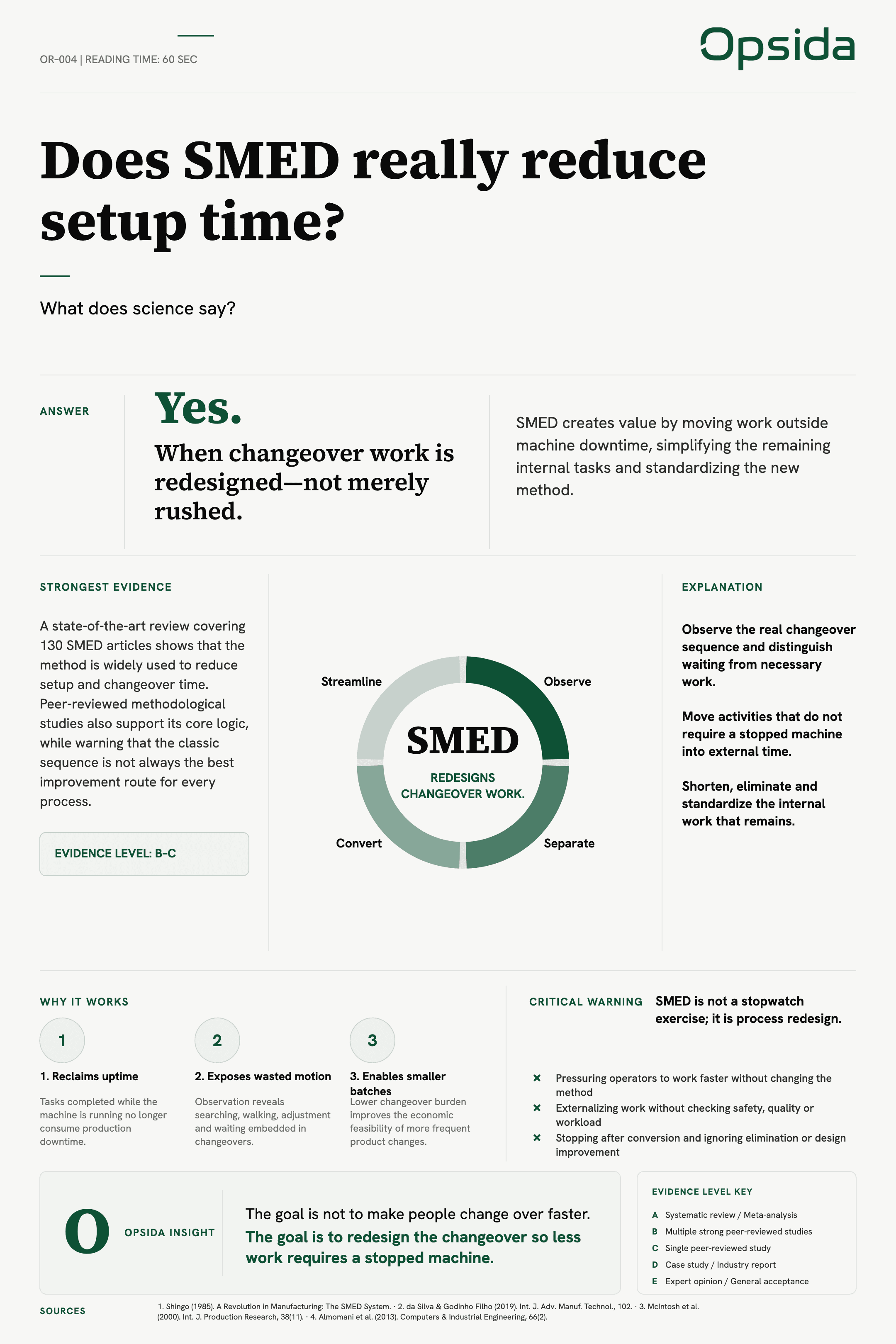
Does SMED really reduce setup time?
Yes. When changeover work is redesigned—not merely rushed.
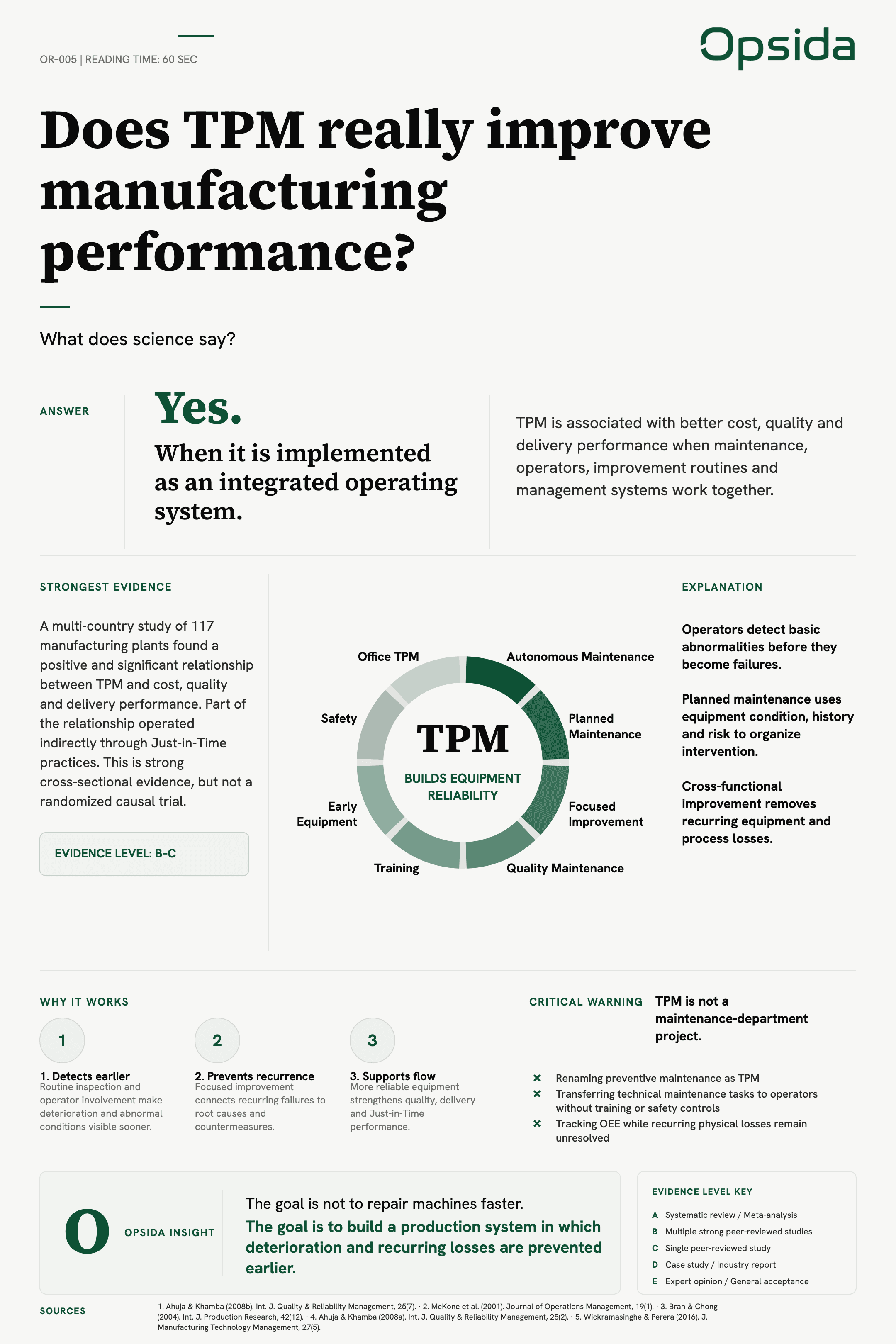
Does TPM really improve manufacturing performance?
Yes. When it is implemented as an integrated operating system.
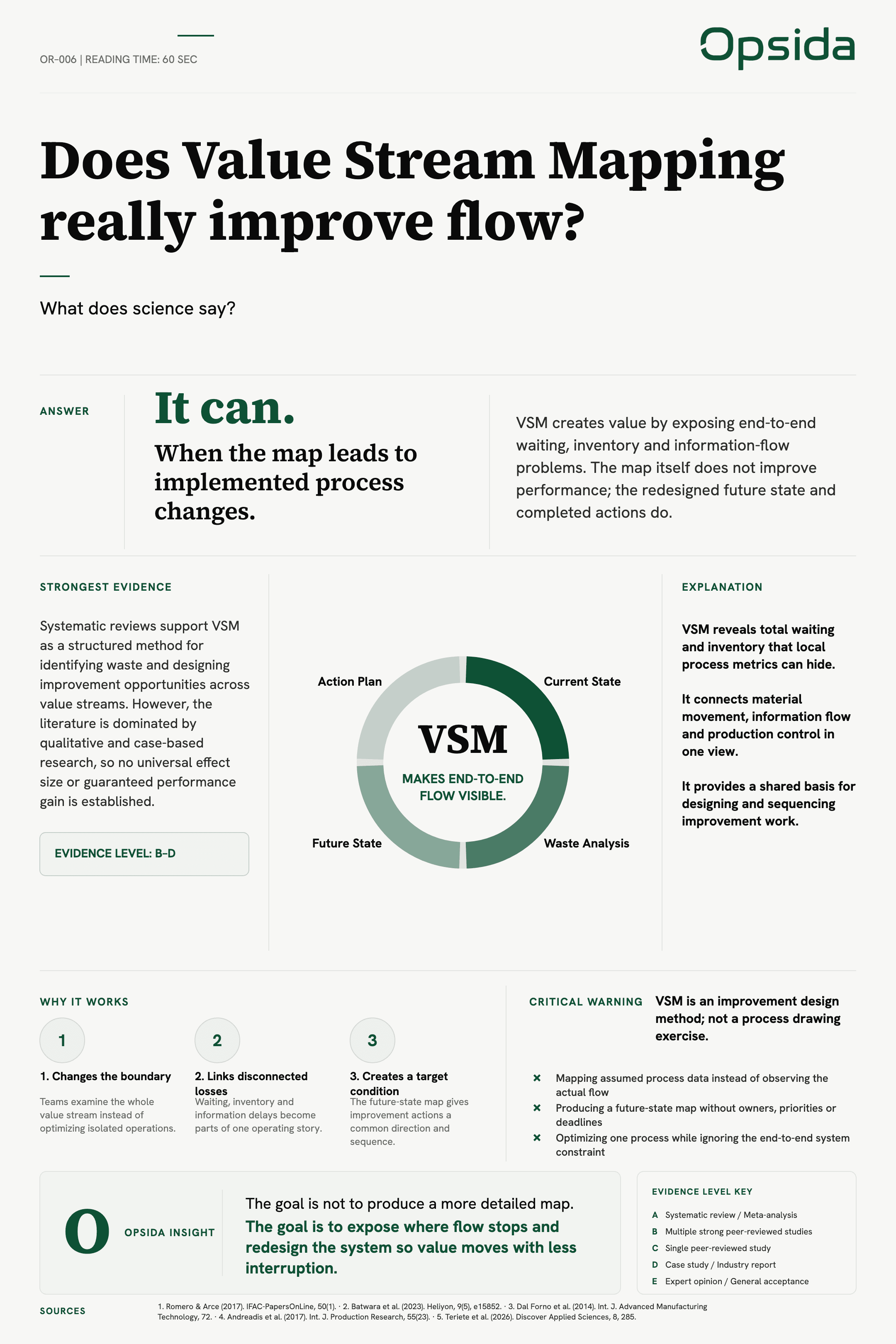
Does Value Stream Mapping really improve flow?
It can. When the map leads to implemented process changes.
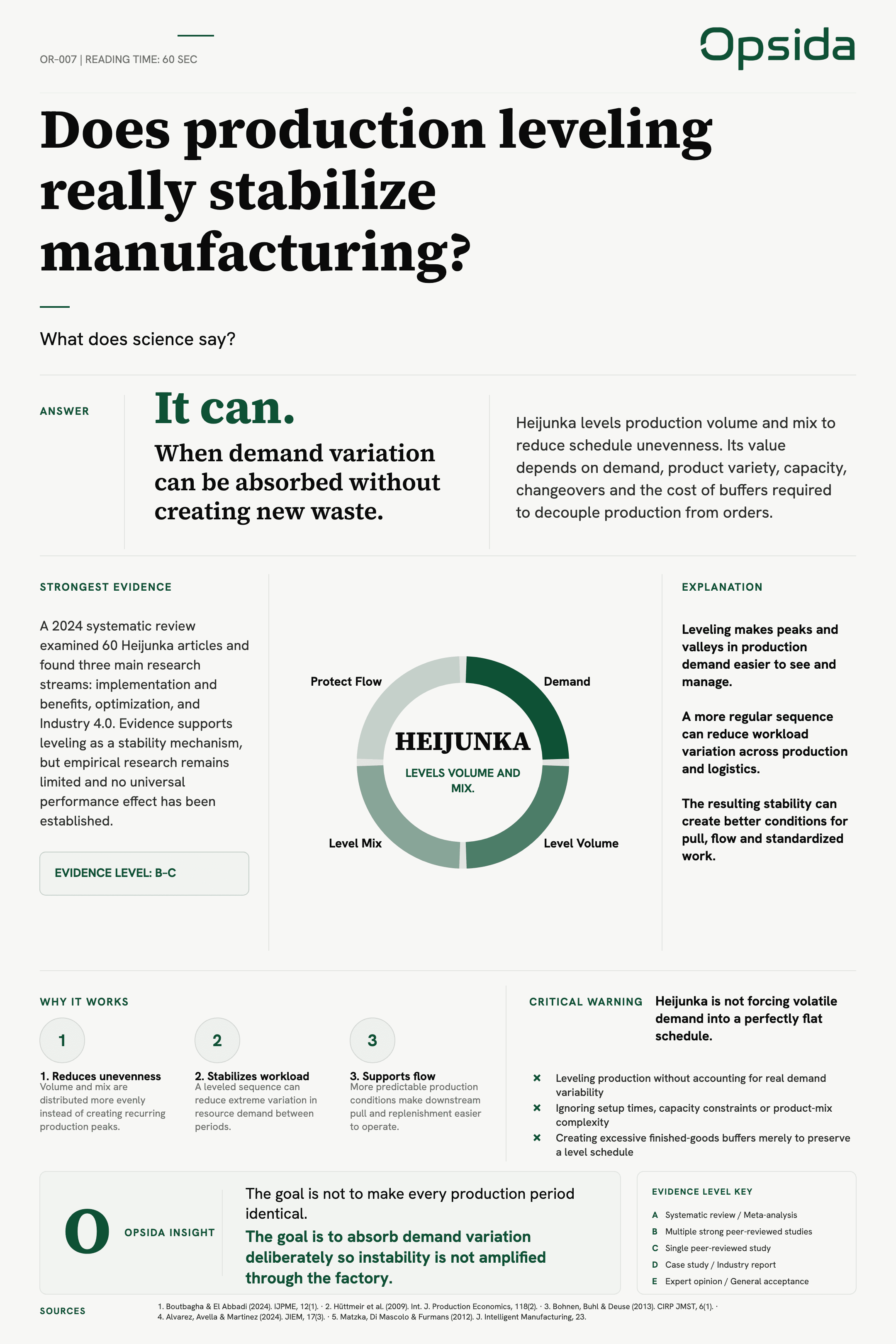
Does production leveling really stabilize manufacturing?
It can. When demand variation can be absorbed without creating new waste.
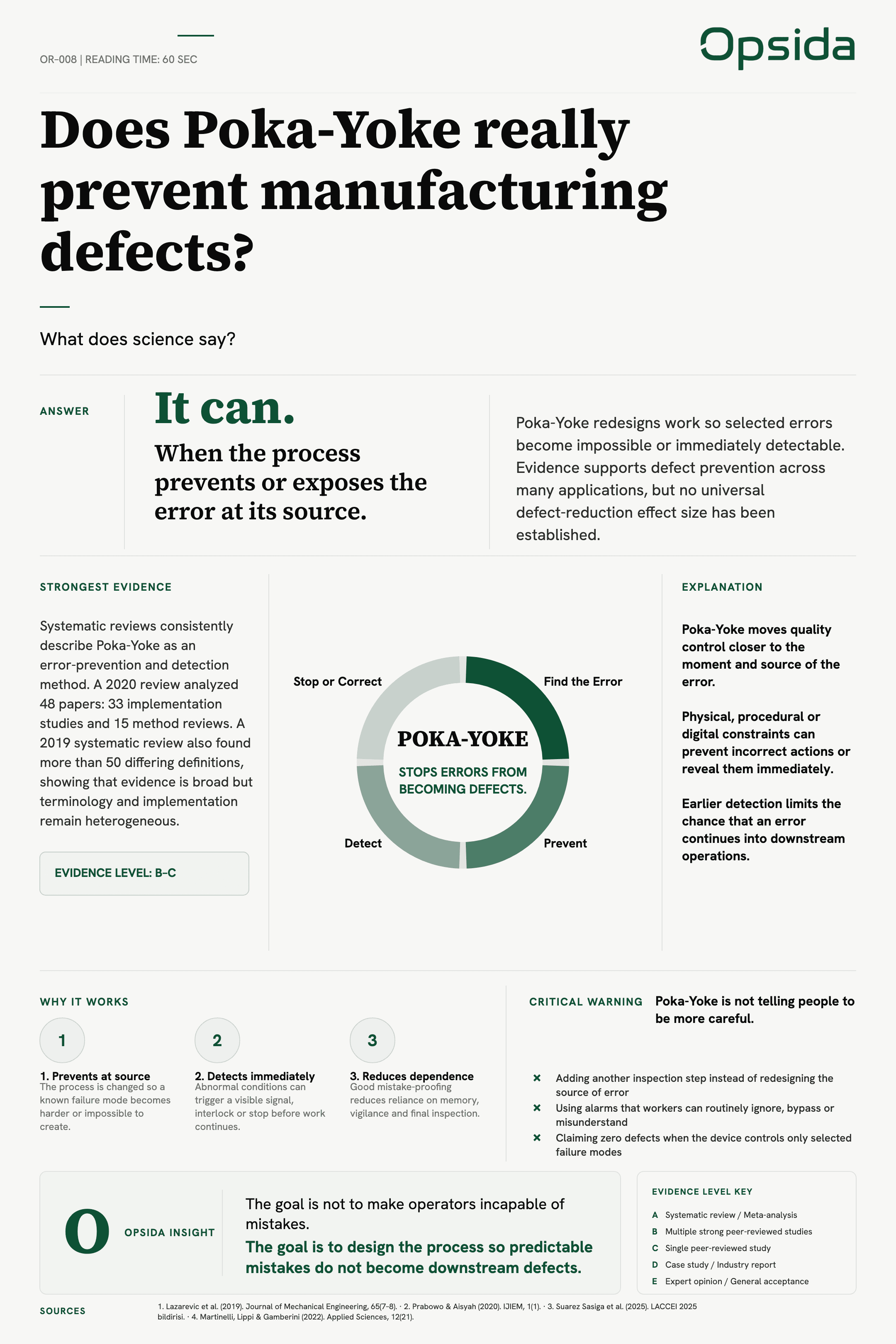
Does Poka-Yoke really prevent manufacturing defects?
It can. When the process prevents or exposes the error at its source.
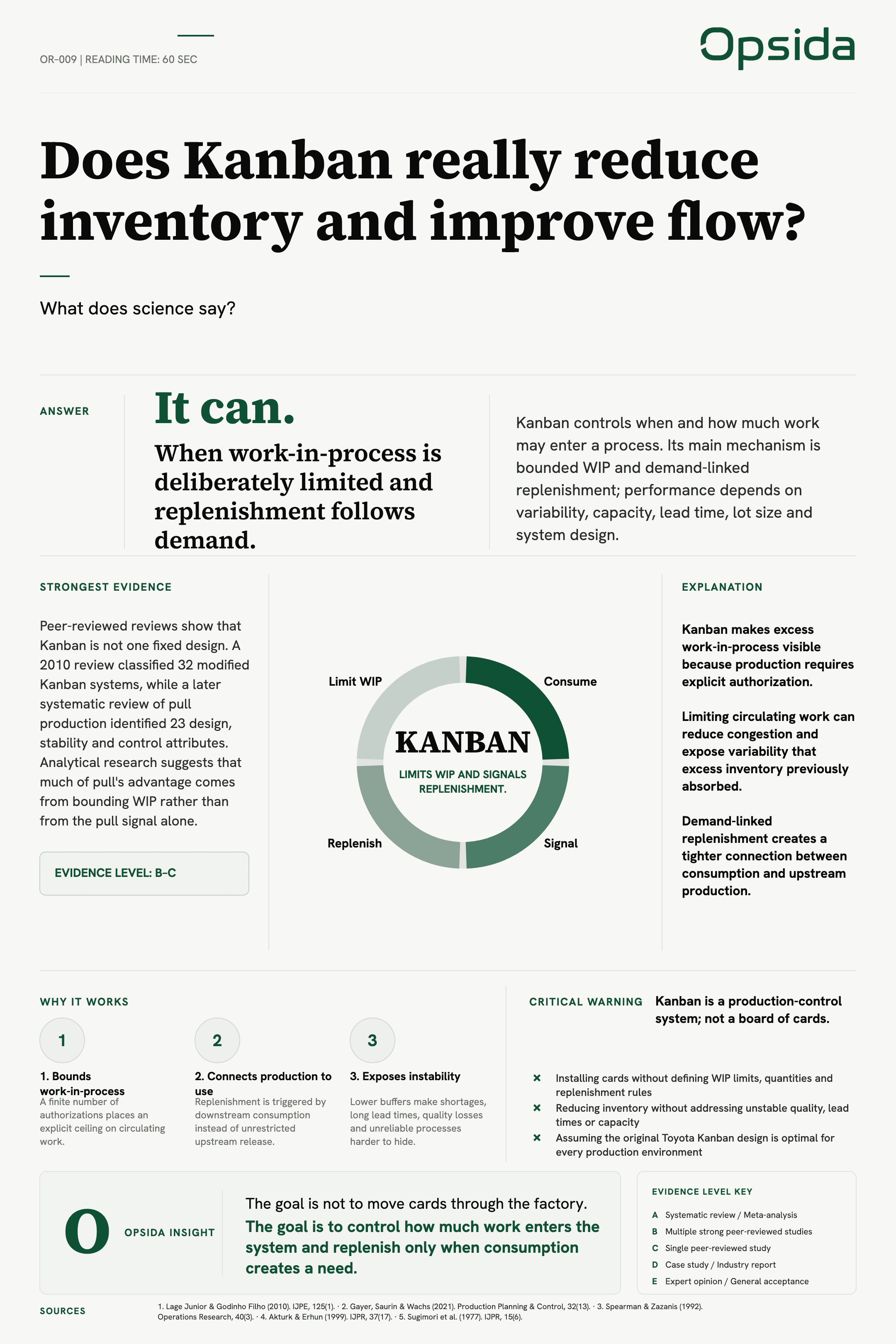
Does Kanban really reduce inventory and improve flow?
It can. When work-in-process is deliberately limited and replenishment follows demand.
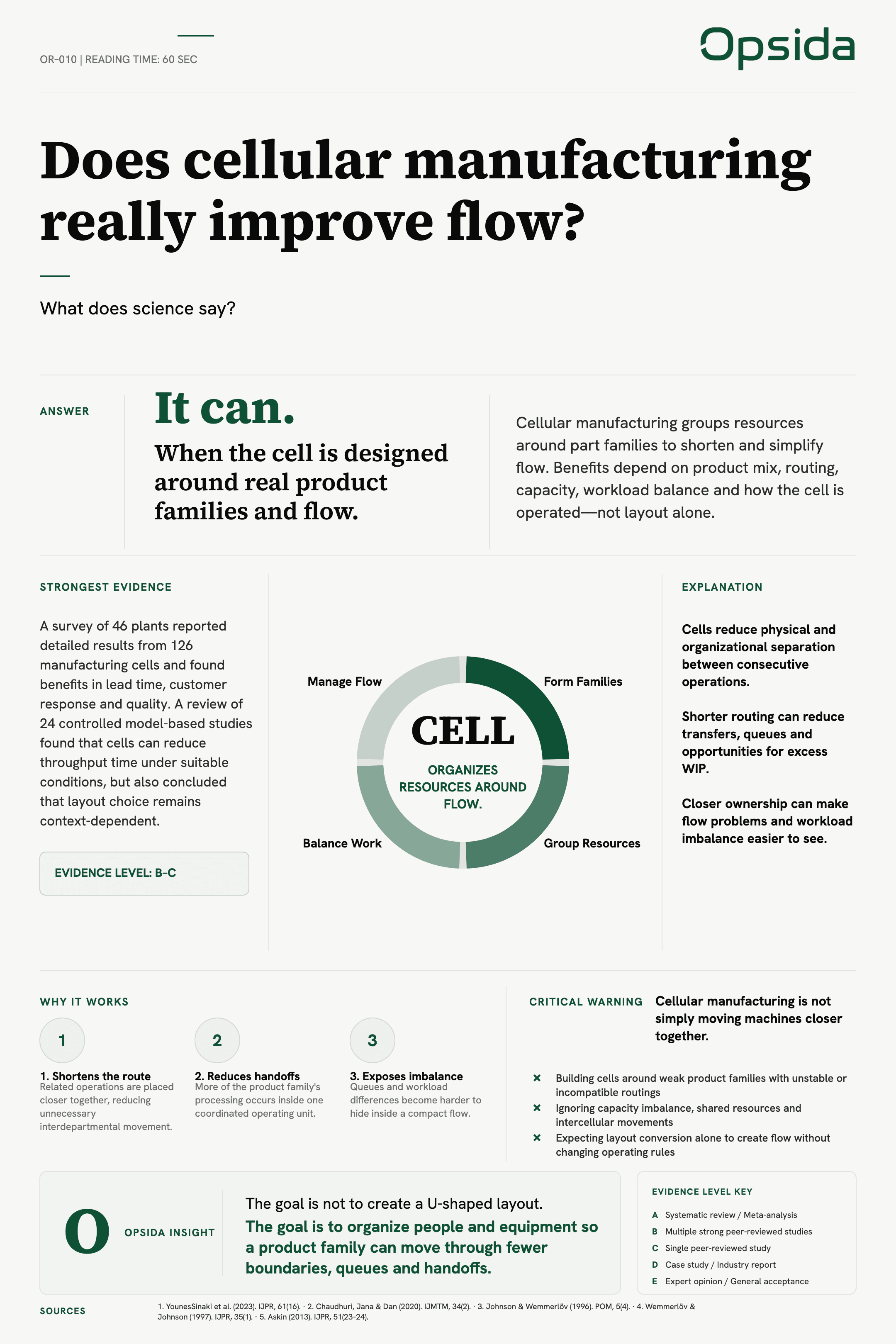
Does cellular manufacturing really improve flow?
It can. When the cell is designed around real product families and flow.
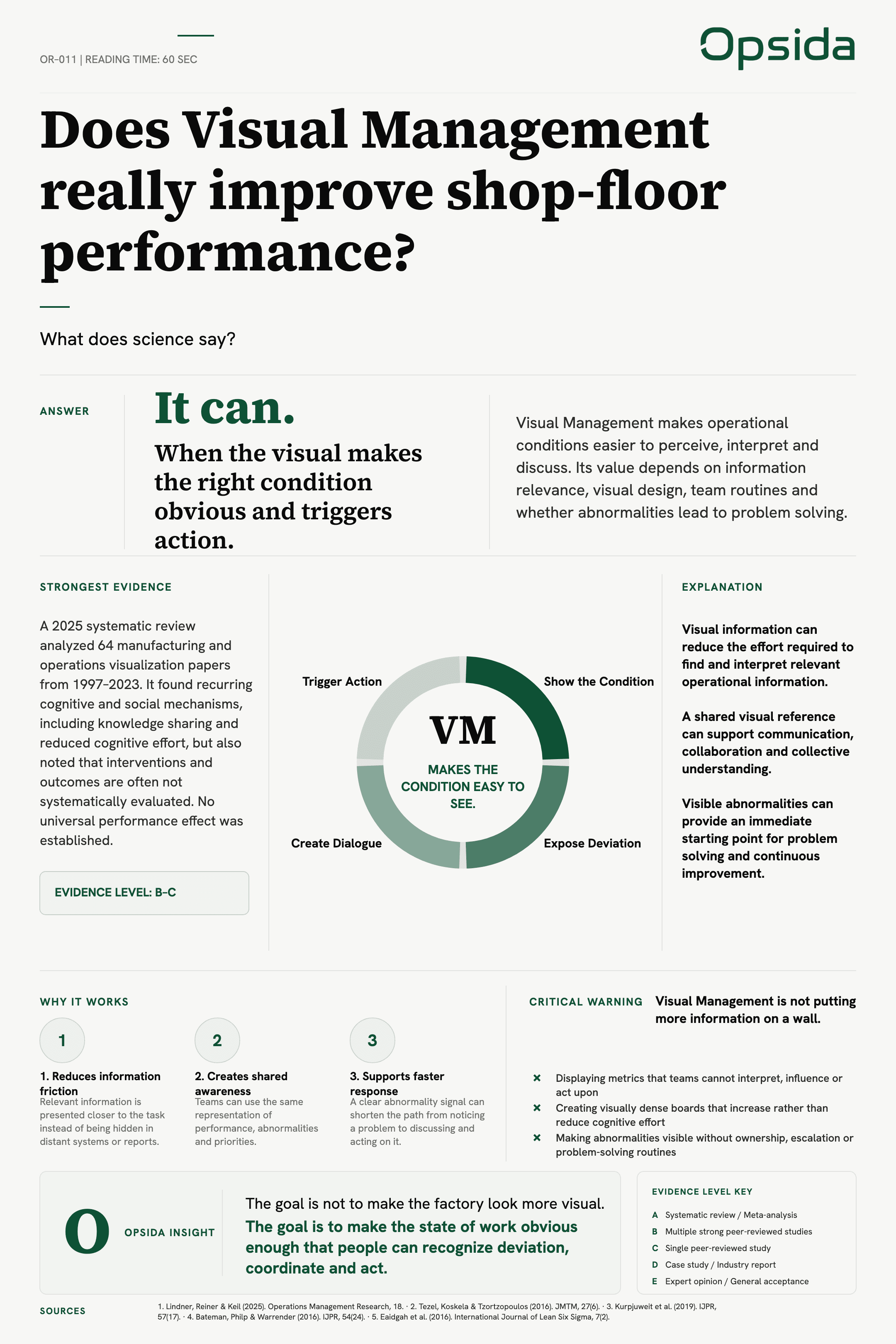
Does Visual Management really improve shop-floor performance?
It can. When the visual makes the right condition obvious and triggers action.
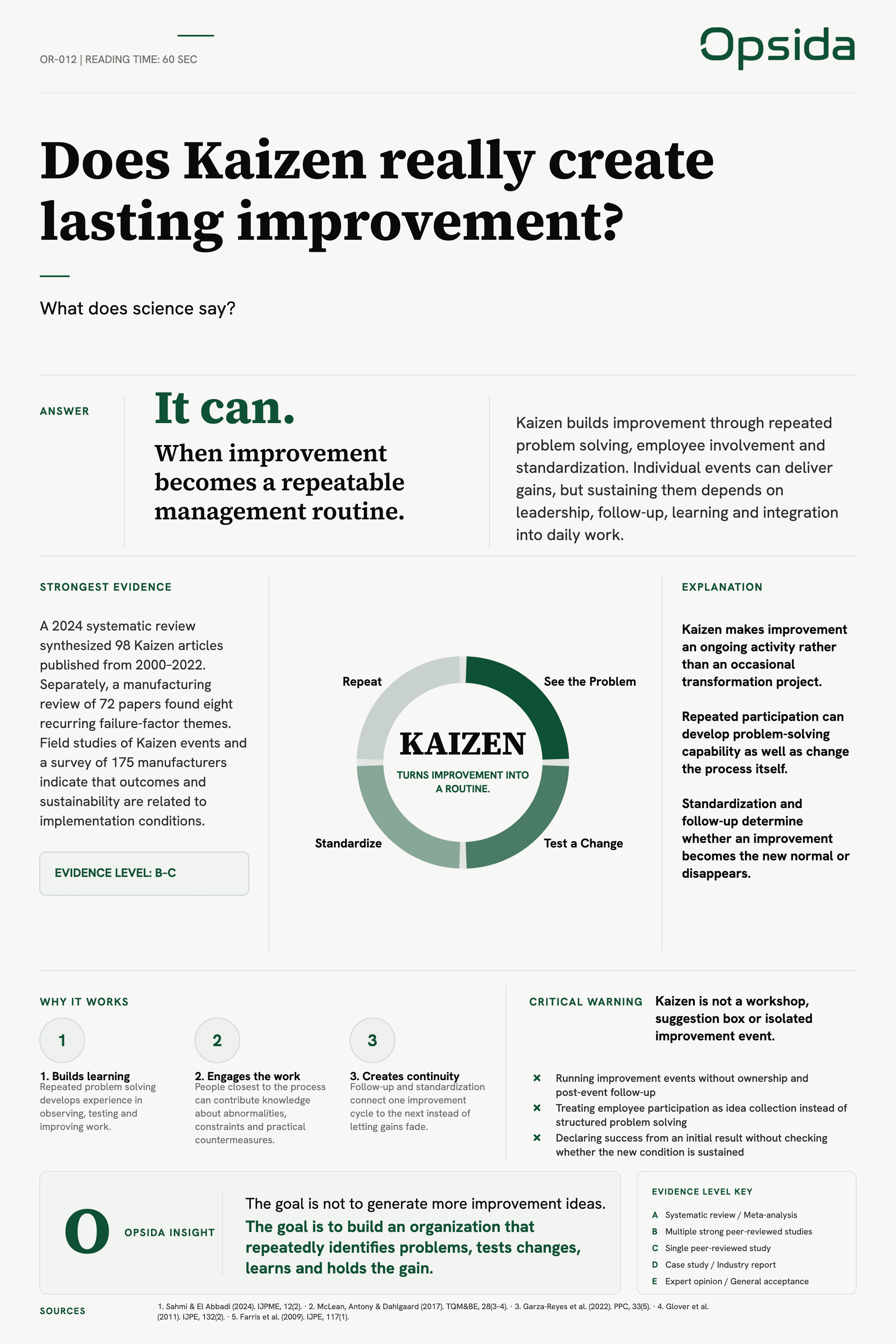
Does Kaizen really create lasting improvement?
It can. When improvement becomes a repeatable management routine.
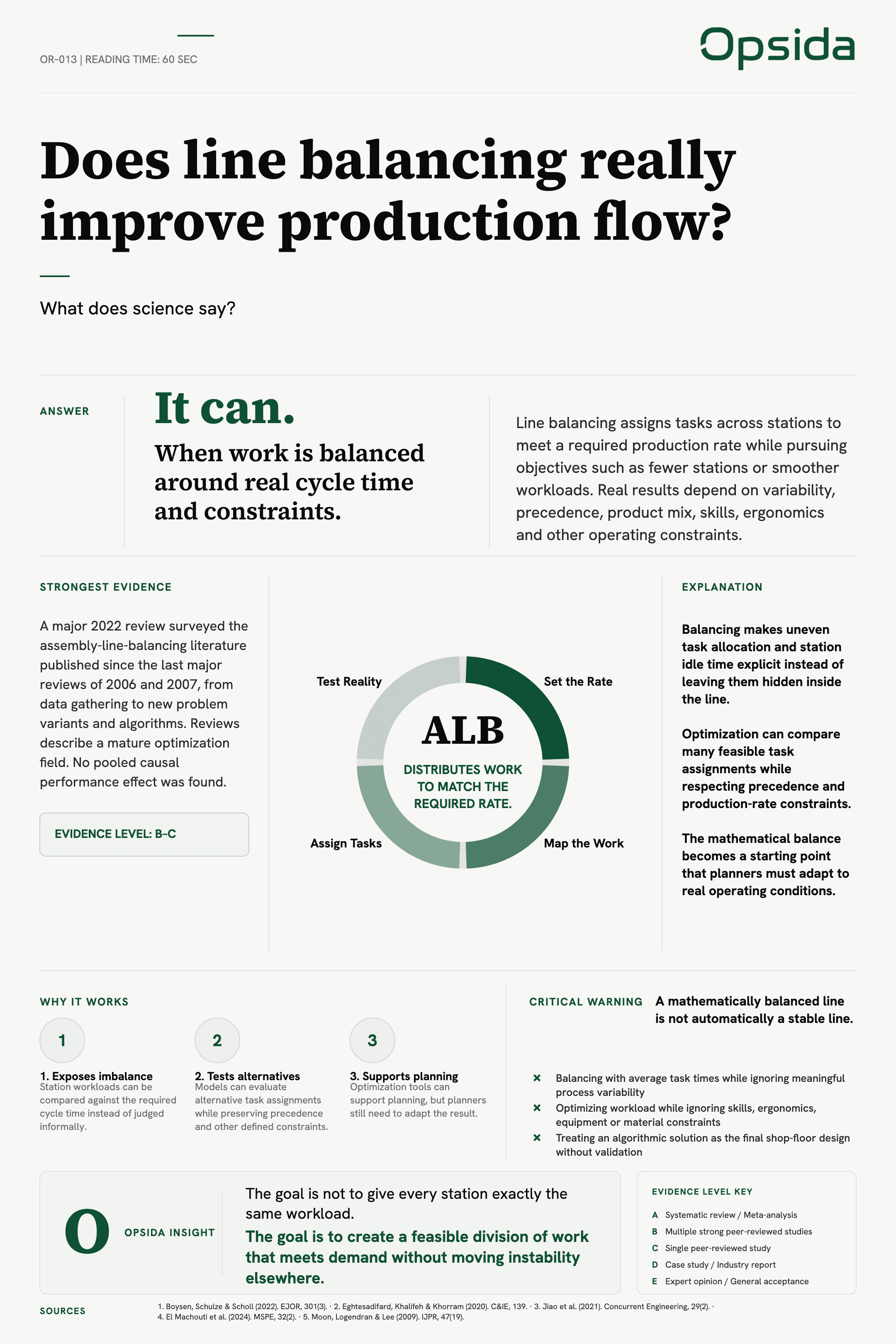
Does line balancing really improve production flow?
It can. When work is balanced around real cycle time and constraints.
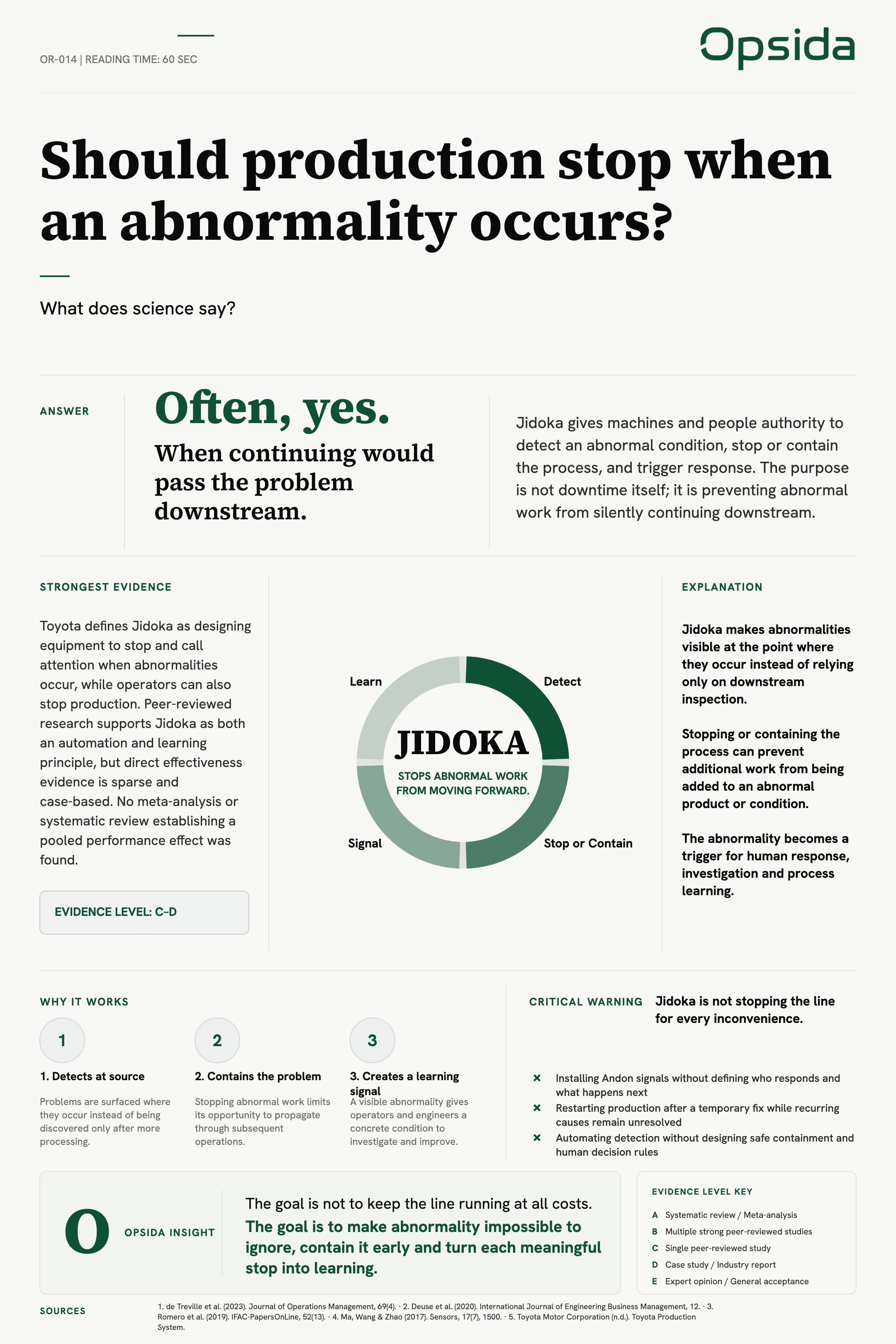
Should production stop when an abnormality occurs?
Often, yes. When continuing would pass the problem downstream.
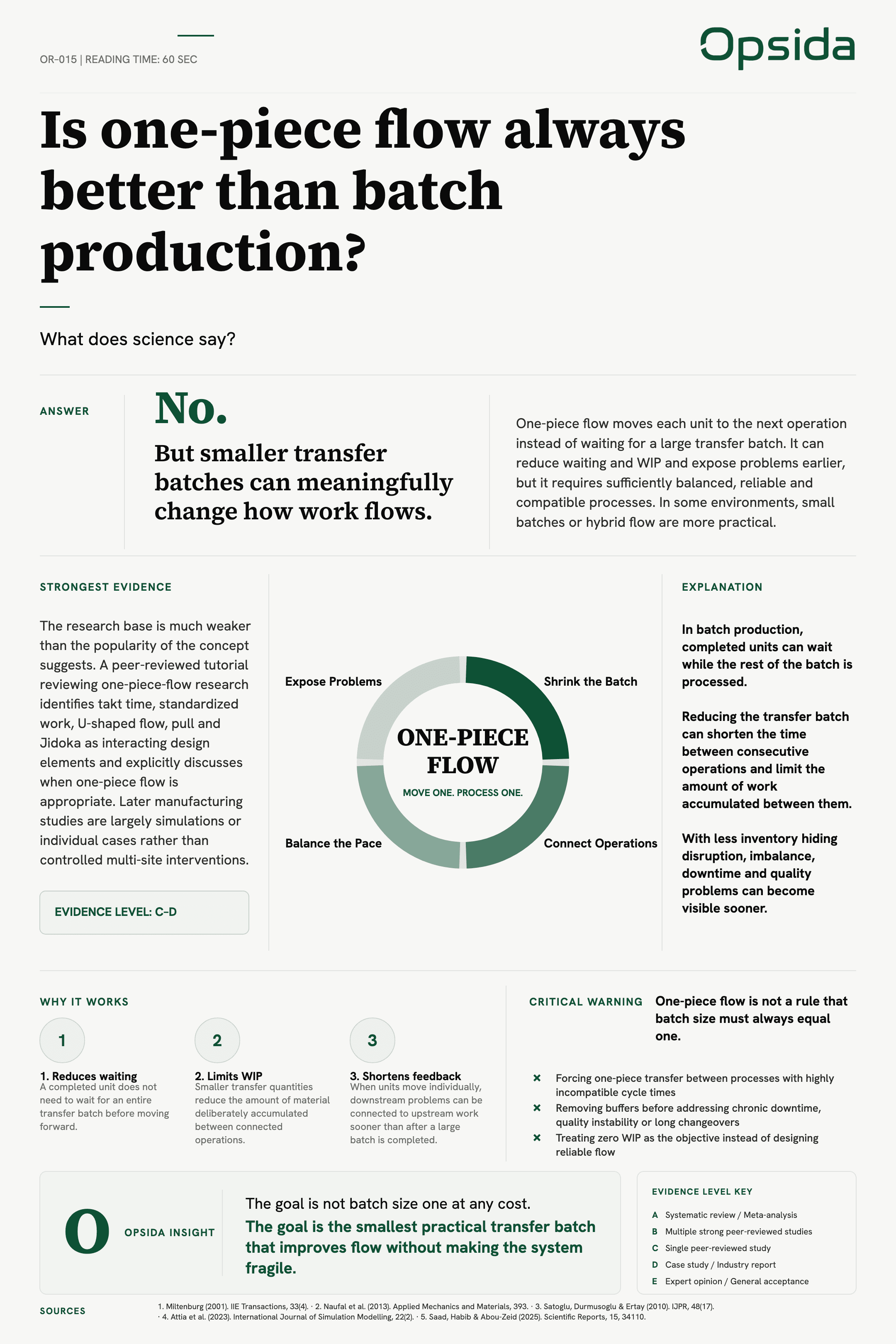
Is one-piece flow always better than batch production?
No. But smaller transfer batches can meaningfully change how work flows.
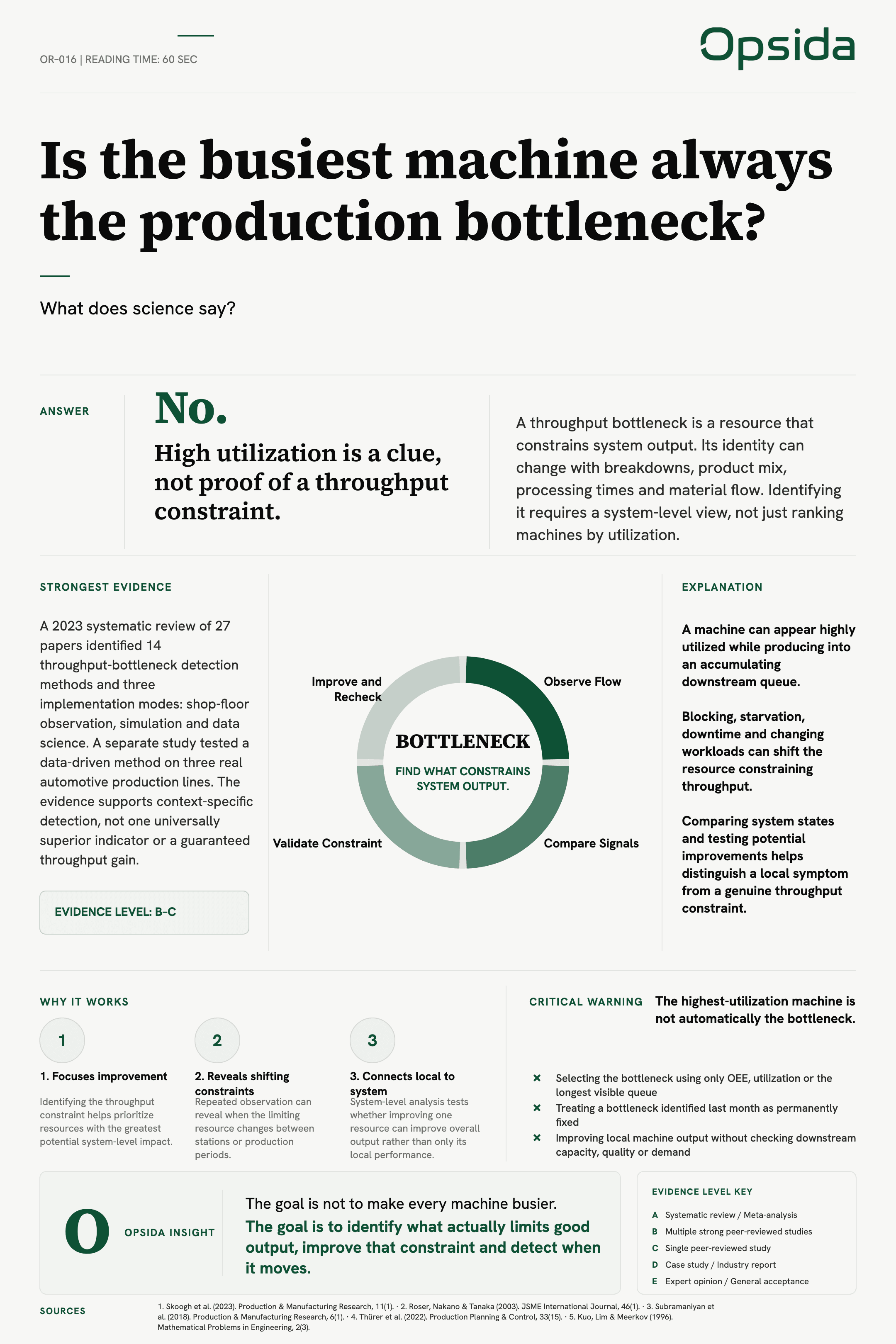
Is the busiest machine always the production bottleneck?
No. High utilization is a clue, not proof of a throughput constraint.
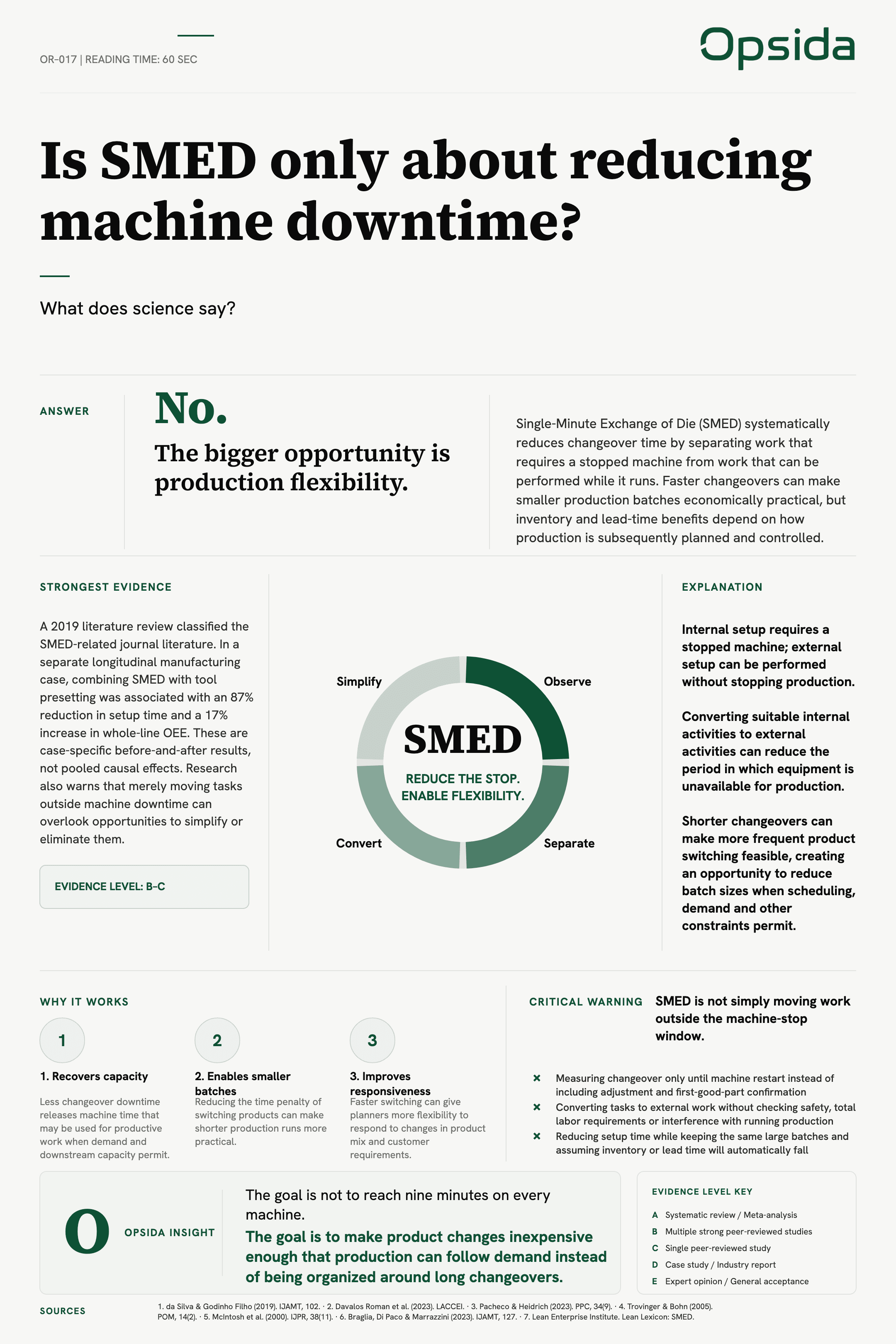
Is SMED only about reducing machine downtime?
No. The bigger opportunity is production flexibility.
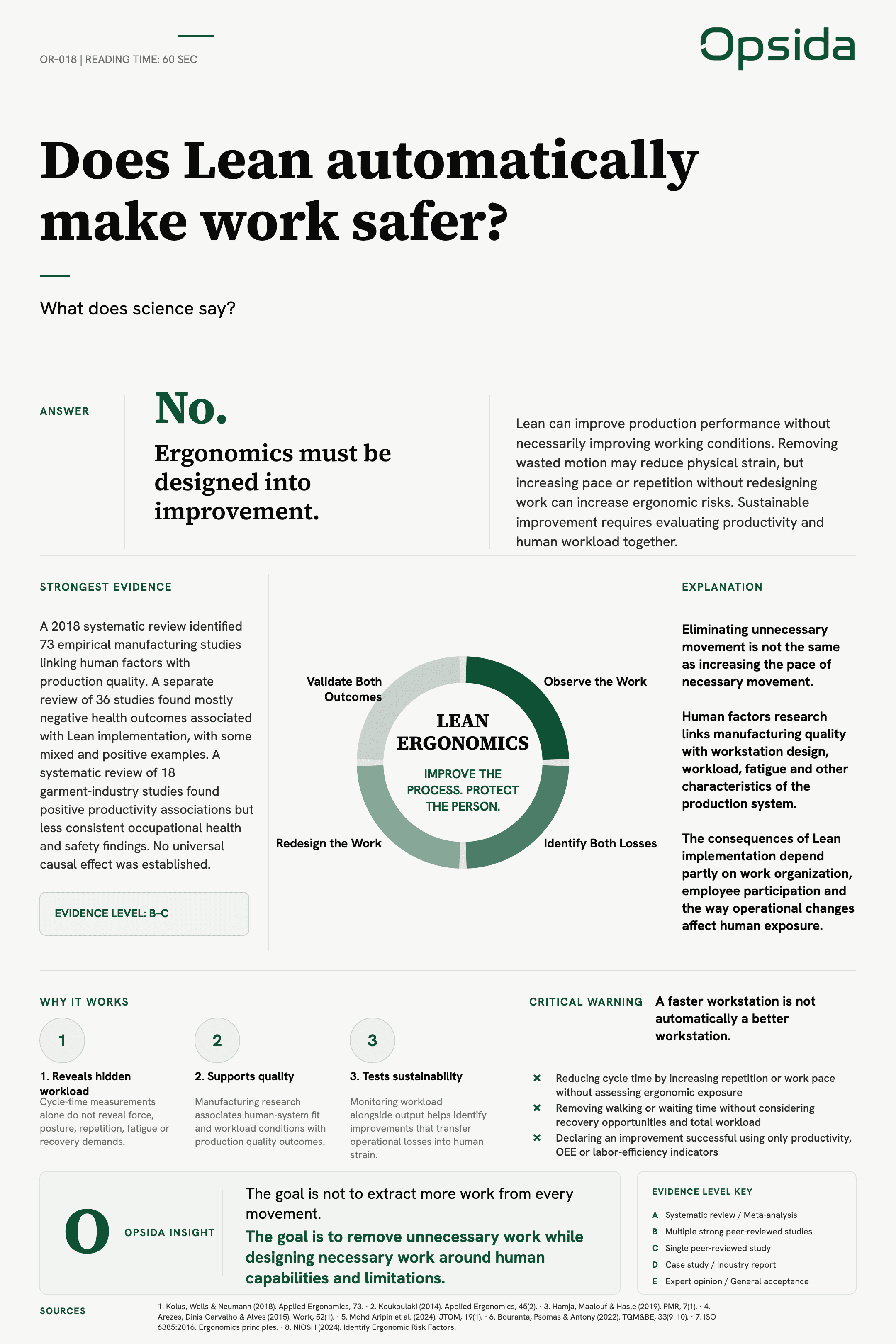
Does Lean automatically make work safer?
No. Ergonomics must be designed into improvement.
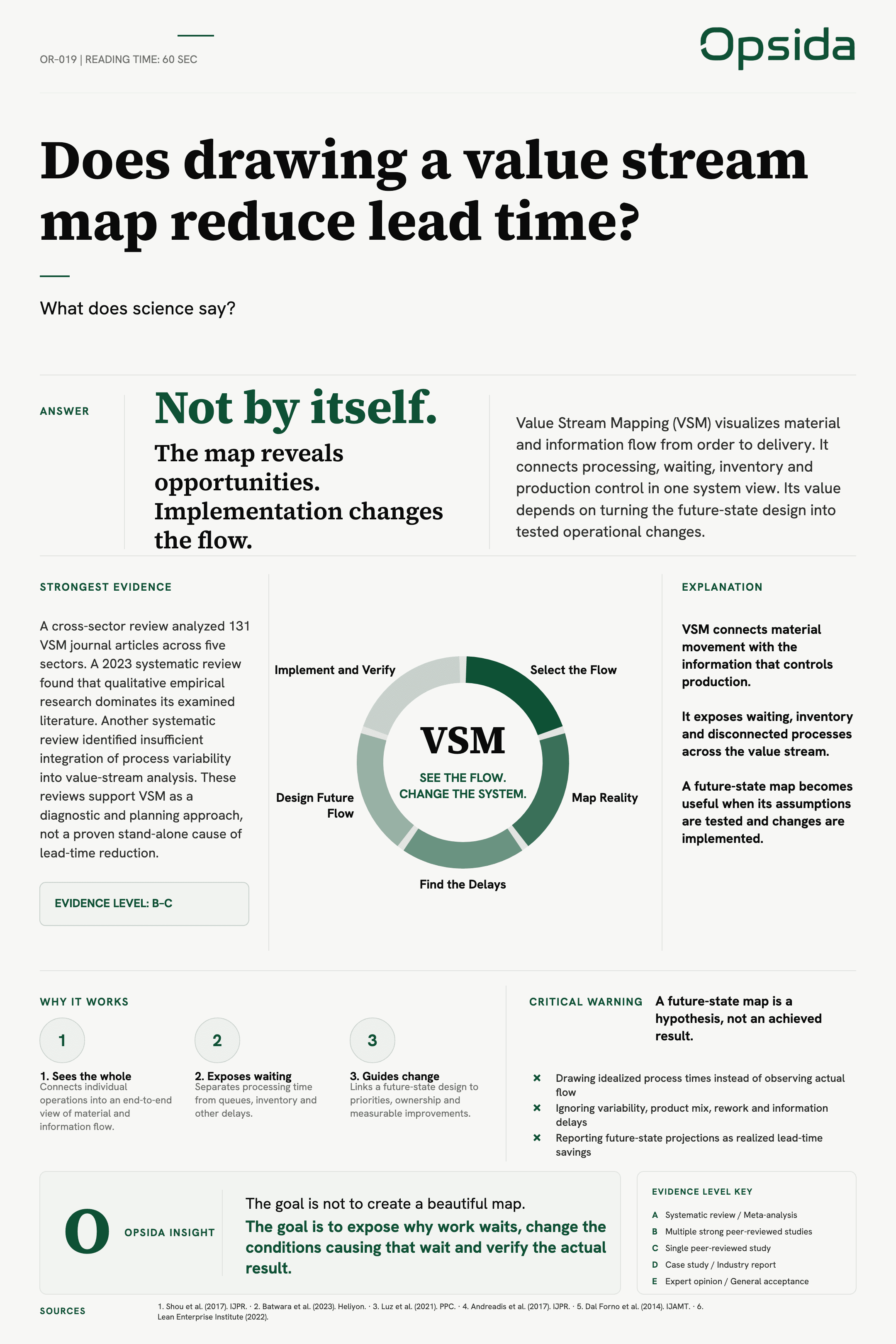
Does drawing a value stream map reduce lead time?
Not by itself. The map reveals opportunities. Implementation changes the flow.
Evidence level key
- A
- Systematic review / Meta-analysis
- B
- Multiple strong peer-reviewed studies
- C
- Single peer-reviewed study
- D
- Case study / Industry report
- E
- Expert opinion / General acceptance